Friday, July 15, 2016

Last reflection

First I wanted to say that I am going to miss this class so much. I loved the people in the class, the professor, and the content that we were learning. I have learned more from this course than any other course this semester, or maybe even the whole time I have been at BYU-Idaho.
  This last week we collaborated with out groups on a final exam. It was fun to collaborate one more time one a case. I like collaborating because I feel like I learn more from my peers and learn more about myself and how I can be a better team player when I work with a group.
  The last reading we had was on responding to student behavior. As I have pondered over this I have realized that ,as teachers, we have to be patient with our student's behavior because it may not always be the ideal behavior we want them to have. But with that, we help them out little by little. I think it is also important that we do not expect perfection from the students we teach. No 2nd grader is going to be still and silent all the time and that is something important to internalize. I feel as if now teachers expect students to listen and behave perfectly , but we have to remember that they are still little kids and still developing. Sometimes it is often necessary to look at your own behavior and teachings strategies as a teacher to see if those are causing certain behaviors in the classroom. What you are doing may not be cohesive with certain learning styles or temperaments.

I am very appreciative to my peers and friends I ahve made in this class this semester, and I really am grateful that Brother Cloward let us take the time to get to know each other because I know that made the difference for me. 

Wednesday, July 13, 2016

LD Simulation

The last simulation I did was the Learning disability simulation where we were not allowed to use any words with the letters L or N as we talked with other people. This was to simulate a slower response to find words and speak them. I was not really looking forward to this one, but like all the other simulations I have learned a lot of respect and empathy for those who have these disabilities.
   The first conversation was at pizza pie cafe. As I was talking the girl looked at me like "is she ok" but then it was like this switch in her face went to understanding. I was really appreciative to this girl because of how she acted towards me. Now, even though I do not have LD others do, and it is so nice to know that there are people out there who are compassionate and understanding to those that have difficulties with LD or any disability in general. It was almost as if she was trying to finish my sentences for me when I would ask her a question, but she did it in a patient way, not a "get to the point, I am annoyed way."
  The second conversation I had was at Walmart when I was checking out. I got some simple things and as she rang them up I asked her if the price was right and the total. She kind of looked at me weird because I was talking to slow and at one point I lost eye contact with her because I didn't want to see her judging me for being slow at saying words. With how slow I was at say words, she just hurried up with my stuff and gave me my receipt to go home. I think that is how some people treat those that do have LD, where they just don't want to talk to them or get their conversations over with so they can move on and do something else they think is more important.
  I think it is so important for us to have these experiences now so we can prepare for those children we teach in the future. I also feel that because we know a very little bit about how they feel, we can teach other children that do not have disabilities to be friendly, respectful, and friendly towards them instead of treating them like there is something wrong with them.

Monday, July 11, 2016

Stutter Simulation

This one was the most challenging for me because of how embarrassed I felt during and after. I went to order a sandwich for lunch. It seems like a simple task to do,but just the thought of it made me not want to get the sandwich and just wait until I was home to eat. But, I did it anyway. As I was talking to the girl and stuttered a little bit, she just starred at me. As I was ordering 2 other girls just stood there and starred at me as well, I guess to see how strange I seemed at ordering a simple meal.
  It made me feel really self-conscious of myself and like I said earlier, to the point that I didn't even want to make the order because I knew they would sit and judge me. It also made me feel really bad about myself, as if I really had a stutter. I just wanted to take my food and run!
 But no matter the embarrassment I felt, the fact of the matter is that I don't have to live with this for the rest of my life. There are many people who deal with this on a regular basis and don't have the ability to turn it off like I did. I have only come in contact with one person in my life who has a stutter, and I don't know them very well. I used to just think "Just say what you need to" but it is not that simple.
  I learned that I need to be more patient with those that have a stutter and be loving towards them. If we judge them and see them as flawed, then their desire to communicate with other people will decrease.

Friday, July 8, 2016

Lesson 12

This week in class we studied how we can evaluate the learning of students with and without disabilities. The book outlined something that you can do to help students and how you can evaluate their learning:
            1. Do all you can to help prep them for test
               -clear study guides to reflect what is expected to understand of certain concepts
               -study sessions
               -more one-on-one attention or help with concepts
            2. Offer accommodation for students that need them
               -more time allotted
               -different environment
            3. Offer feed back or additional help if needed for after the test.

These 3 things can be really beneficial to students that are not good at taking tests, are not organized, or who need more help based on certain disabilities. The more you can do to offer opportunity for your students, the more they will grow and flourish.

 We also discussed more about visual impairments as our disability for the week. I know for me that would be very difficult to go through. We did a simulation where we had to be blindfolded while doing a few tasks. It was so hard for me. Because I couldn't see where I was going I felt like I was going to fall off of my feet face forward. It was terrifying. Because I couldn't see, I was relying a lot of my sense of touch as I walk by feeling the walls with my fingertips. I gained a greater respect that day for those who do live with visual impairment.
 In class today we also talked about emotional disturbances. This was different than what I thought it was going to be about. We talked mostly about depression, phobias, and obsessive compulsive disorder. It didn't dawn on me before this class that depression can disable someone from learning. My mom, sister, and husband suffer from depression. I have seen firsthand that experiences they go through and the hard ship it really is. There are some days that my husband stays in bed or sleeps all day because he physically can not get out of bed. He cries as well for part of the time. this soon begins to take a tole on me and I just feel helpless. But what I have come to realize is that despite being sad, they are still capable of finding joy. When my husband has his bad days, I do all I can to be that ray of sunshine he needs to get through the day. It can be emotionally draining, but it is something that helps a million percent in the long run.

Friday, July 1, 2016

Lesson 11

This week we read chapter 10 in the book which was all about teaching independent strategies to our  students and how we can help them to achieve personal independence. This has so much to do with helping our students see the importance of self advocacy. We live in a society now where everyone wants immediate outcomes and everyone wants something for nothing, no work. But if we can teach the importance of doing things for yourself and taking advantage of all opportunities at a young age then think of how competent and self reliant those children will group up to become. They will then live in a world of "I can do anything I work for", instead of "these are my limitations, i'm going to stay here. " Today in class we skyped with a girl names Emily who was born will no sight whatsoever. When she was little she wanted to become a bus driver. Now this desire really is unrealistic because she can not see to drive, but her mother never told her that she couldn't. Instead he mother instilled in her self advocacy and that she can accomplish anything that she works for and puts her mind to.
  No child wants to grow up being told they can't do something. when this happens creativity decreases, self-esteem decreases, and the desire to explore and learn will never increase. We as parents and educators MUST teach children that they can no ANYTHING they desire and work for.
  Another profound thing that  Emily shared with us today was that she feels like she do not have a disability and her not being able to see is not a deficit to her. She actually said she hopes she doesn't have the ability to see once her body is resurrected because she likes this part about her. WOW!! Just wow! A 15 year old girl explaining that she doesn't want to see because she likes who see is...i was speechless when she said that. If we all as parents could help our children love who they are and not see disabilities as a set back but as positive unique characteristics, then out children would learn to love themselves for who they are.
  I hope when I become a mother I can help my children feel empowered and confident in themselves and love who they are. This little thing can go a long ways.

Don't use the would can't...its the new swear word.

Friday, June 24, 2016

Lesson 10 Differentiation

As part of learning about differentiation we got to teach a lesson using aspects of UDL and differentiation. UDL is a universal design of learning that can accommodate for all students. From this lesson plan all students should be able to learn what is being taught. We picked the topic of knot tying. We taught the square knot and figure 8 knot.
  Once we had the UDL we went to assess the current knowledge of the groups we were teaching and make changes according to the data that we collected. This was a challenge because we first started with wanting to teach the fisherman's knot. But once we got the data we soon learned that this was too advanced to just teach right away. Once data was received we did some differentiating to help our groups succeed.
   Working with the group was a personal struggle for me this week. Not a lot of people were willing to step up to help, and some did not come to meetings. I personally struggle with group work because in the past not all have done their part. This project some people did their part, but not everyone. also the topic wasn't one I really wanted to do because of the difficulty of the fisherman's knot, but the rest of the group liked the idea. As things went on and we were able to change things and make them more smooth the group was on track again and there was a sense of ease instead of chaos. I learned that sometimes you don't always get to have the best idea in a group setting and you have to let someone else take the lead and go for the idea as a group.
   Teaching this morning was the most fun. It was really fun and welcoming to hang out with our fellow students and teach them some fun skills.
  Differentiation is so important because not everyone is going to learn in the same way or at the same pace. This may be time consuming but overall will have a greater effect on learning than a regular lesson plan.

Thursday, June 23, 2016

Visual impairment Simulation

One of the many benefits to our physical bodies is the function we have to see from our eyes and observe the world around us. But what would happen if that was taken from you? What if you could not see the world around you? There are many that suffer from visual impairments that do not have the ability to see. For this simulation I had to wear 4 different masks to simulate different types of orthopedic impairments.

   The first mask I wore was to simulate the loss of one eye. I could only see out my left eye and it was very challenging. At first, my depth perception was way hard, and I had a very difficult time cooking lunch for myself because of that lack of perception. But I was still able to see a majority of things clearly with little trouble. The longer I had the mask on the more acclimated my eyes became to the situation. While wearing this mask I typed some papers up and it was difficult, so much so that I was pretty close to the screen so I could see what I was typing.

   The Second Mask I wore was to simulate macular degeneration which is the loss of the central vision. This was very hard to see at first. It was hard for me to base my vision off of just my peripheral vision. This was very hard to do my typing of assignments on the computer.

The Third mask I wore was to simulate glaucoma with very limited field vision. It was easier to focus on one thing at a time unlike mask number 2, but I could only focus on one thing at a time. It was also difficult anticipate if anything was coming into my field of vision because of the lack of peripherals. I found myself having to move my head in order to focus on people or objects.

The fourth and final mask was to simulate issues with lens such as astigmatism and other visual loses of acuity. This one was the most difficult. I really could see nothing, the only thing I could see was a little bit of light and silhouette of some shapes. This made me so frustrated and I felt alone because of how dark it was. I also felt incompetent because i could not see well enough to do anything. I image this is how some people feel with this particular impairment.

This simulation was so frustrating to me because I have never been without my vision and it was awful to not have it. I do wear glasses but not to the point that I cannot see things without them. I definitely take for granted that I can see when there are many who cannot.


Service learning June 23, 2016

   I was so excited to go into service learning today. There is just something about the way you feel when you're there that brings hope and happiness. I just feel good around them and want to be there. Today I was there for 2 hours with the clients. When I got there, there were new clients that I hadn't met before. It was great to get to know them and hang out with some of the others that I had met before. For the first hour we played uno. Uno is THE game to play there. This was supposed to be a super short game that turned into the longest game of uno. It was awesome to see them individually see the color or number and put down a corresponding card. Along the way as people won we kept playing for 2nd place, 3rd place, and so on.  They began to help the others remaining in the game. Uno games here and never about winning really, they are about helping each other to succeed.
   The second hour I was there we watched a video about different national parks. The clients we able to see what other places look like, what kinds of animals live there, and what plants thrive in those specific places.
   I have loved going to service learning. When I came home from these experiences I have told my husband that we should go together, even after this is over, to volunteer and feel the amazing spirit that resides with these individuals. I know that feeling is the spirit. Heavenly Father loves them so much and wants them to success and that is why he has helped to provided special services for them so they can succeed.

Wednesday, June 22, 2016

service learning June 14

On June 14th I was able to go and do 3 hours of my service learning at the development center here in Rexburg. Honestly, I was a little bit nervous in going because it was a new experience and I didn't want to say or do the wrong thing. When I got there, they were eating lunch. I thought it was way neat that they prepared their own lunches, to the best they could, and they would clean their spot after they were done eating. This is a great thing to help with cleaning skills and taking responsibility for their actions.
  After lunch they divided into groups for some group time. The first group I was in we sat around asking questions back and forth and fostering a typical exchange of communication between people. It was really fun to get to know them more and it really built a relationship for the rest of the time i was there that day. They all learned my name right of the bat and were so friendly.
  The next group I was in we were able to put together 3 different puzzles. this was a great team building activity to help them learn how to successfully work in a team and help each other out when needed.
 Lastly we played the biggest, most exciting game of Uno that I have ever played with any group of people. This was really a group effort Uno game and it was awesome to see them all work together to help those who struggled more than the others did. It was also fun to see some of their personalities come out as competition heated up.
   I really loved the first experience I had there and learnd to be real with them. People with disabilities don't want to be treated out of pity or in a fake manner, but want to be treated as equals, as real people.

Orthopedic Impairment simulation

Have you ever wondered what it would be like to not have the use of your legs and wheel around in a wheel chair all day, everyday? For most of us we do not have to experience this hardship but for some it is a real struggle. Some live with this their whole lives and suffer the affects socially, emotionally, and even physically.  For class we had to go through this simulation in a wheel chair for 2 and a half hours to see whats its like from their perspective and it really helped me see the unknown challenges that come from being in a wheel chair.
1. Socially things can be awkward. I don't really remember a time wheeling around that people didn't look at me funny probably wondering what it was that happened to me that made me have to rely on a wheel chair. I got an occasional smile that was genuine but for the most part i got lots of weird stares. This really made me feel small, made me think that I wasn't normal and that I was not capable like others who have the use of their legs. But in retrospective, there were 3 people that really reached out to me through pushing my wheelchair and opening doors for me that not only assisted me physically but socially was greatly overwhelming. I felt as if there were seeing me as a real person who was normal just like them. I went from feeling judged to feeling special and of worth when they did talk to me.
2. Physically things are not as easy to get around as perceived. One of the biggest challenges I faced was going to the bathroom. but not just the get from the toilet to the chair and vice verse, I had a very hard time just opening the door and getting into the bathroom itself. The door was way heavy and not accommodating to those who use a wheelchair. I felt super embarrassed because of this and no one helped me. This bathroom said it was wheelchair accessible but not for getting into the bathroom. Another thing that was difficult was wheeling down hill. I was going really fast and I didn't want to fall so I would use my hands to try and slow myself down; but the wheels were so hot from the friction that it was hard for me to grab a hold and it not hurt my hands. Uphill was also hard but i was lucky enough to have someone offer to help me up hill.
3. When asking for help or directions I was talked to almost as a young incapable child. I remember asking one girl for help and she talked to me with this high pitched voice as if I were an infant that could not understand English.
I have always had great respect for those who are wheel chair bound because one of my best friends growing up needed to use a wheel chair. His disability never affected our friendship and i never saw him differently because of it. But I feel now that I have more empathy for those who do suffer from orthopedic impairments from the experience. If anything, I learned that it can be very socially awkward and embarrassing but that we as educators can have a tremendous impact to help these students feel just as accepted and normal as we can. They are normal, we are all normal; we all come with something different that makes us unique.

Friday, June 17, 2016

Week 8

Do you see this as a big problem? How would you feel if  you could not reach your own potential as an adult? Now think of how frustrating this can be to children who don't have resources to reach their potential in life. This is a big concern for educators and physicians, and what needs toe be done in order to help children reach their potential.
   There are really two basic ways we can help foster success in infancy, since brain plasticity is most critical the first 1000 days of life: GOOD NUTRITION and PLAY BASED STIMULATION. Play is way more important than we think because it helps to create and stimulate language, build communication skills, and leads to better cognitive development over all. Simply playing with your children during the day will give them better opportunity to succeed in the future. Good nutrition gives way for a healthy life style and helps in not only development of the body physically but all the brain as it continues to develop through childhood.
 These are some little things that we can do to provide the best education we can for our children.


Friday, June 10, 2016

Week 7

This week in class was a pretty big eye opener for me that I learned from just a little thing. In class we drew a concept map as w hole class to go over what it was that we read for that week. This last week was all about a classroom environment and different things we can do to enhance the experience the students feel. As we were going up we were hitting the big main points that were mentioned in the reading, but Brother Cloward kept telling us that we were missing something really important, but we all thought that we had hit the main points. He them started talking to us about individuality and we are all important, we are all children. This led us to adding things such as  we are all children of God and that every individuals progression is very important. This was a very good lesson for me to learn thing week. I feel sometimes we can miss out on this and just see our students as just students. We can get so caught up in just teaching curriculum, grades, or even just keeping our sanity throughout the day.  But when we really remember that we are all children of Heavenly Father and that we all have a purpose we go from a textbook kind of teacher to one who teacher by feeling and needs of the students. We should never forget the divine nature we all have a children of God, even in the classroom.                                                                                                                                                                                        

Friday, June 3, 2016

Week 6: Assessments

I have learned that assessments are so essential in the process of education on all levels: in the general education class and in special education. Assessment is how we evaluate needs and to what extend to administer needs.
It is important to make note that assessments need to be  appropriate for all levels of development. Lets take this picture for instance. this assessment indicates that all must do one exact thing even when ability is impossible. Sometimes we are teachers do the same thing to the kids we teach instead of giving appropriate assessments based in needs including culture.
  There are some assessments however that are standardized in nature, which is trying to determine how well students meet expected knowledge of curriculum. With these sort of assessments some students will need certain accommodations in order to perform such as having things read to them or take the test in a different room.
  It is also important to know that assessments should be taken frequently. Children are always learning new things so it is important to take frequent assessment on where they are at and their progression.
 

Thursday, May 26, 2016

Week Six: Collaborate

Have you ever had a teacher or coach ever tell you that "There is no I in Team". If anything I have come to learn of even greater importance of collaboration.
  Sometimes I think I know everything, but turns out most of the time I don't. It is not until I start to talk with other people and learn from them do I really start to grow and sustain more knowledge.
    The whole meaning of collaborating is working together, bringing knowledge from all persons to create and ever better outcome.


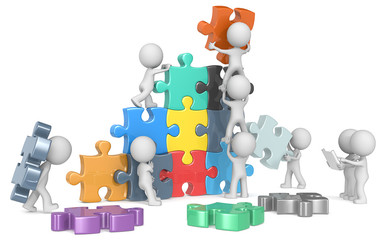
In essence we all come together with a different piece of the puzzle. We may know what the picture may be from our one piece and we may even understand exactly where our piece goes: but it is not until be bring all our pieces together that we know what the picture is or building something amazing.
   This can be related to teaching and how we work with other professionals to help those students with greater needs. As we put forward out best efforts and contribute we can accomplish so much. As we all know the part we play, work things out together, and have mutual respect, the students we help will be able to flourish and progress in their education.
   Granted, there will be opposition when collaborating: no one thinks exactly the same. but this gives us a chance to better develop our problem solving skills together. No ones thinking is more right than someones else's, but it is our job to communicate and problem solve to come up with the best solution to ensure the best education all students have a right to.
  When I think of a collaborative effort the first thing I think about is my husband and I and the 1 marriage that we share. We both come from different back groups, families, and even cultures. but despite the differences we have 1 marriage and that makes us a team. Collaboration in Marriage is extremely important: without it you can not progress or gain happiness. If one of us quits, then the other one suffers, but on the other hand if one succeeds then we both succeed. The same can be easily said about collaborating as educational professionals. As we ALL work together there are incredible outcomes and growth both for us an individuals and those individuals which we are stiving to help succeed. Its a win-win!

Friday, May 20, 2016

Week four and five: Importance of the law

If anything these last two weeks has really taught me the importance of law in education and how vital it is that teacher and parents know the laws that pertain to their children's education.
 Any type of law has a purpose to protect rights and provide some type of security to the people they affect. Since the late 1950s, there have been many laws put in place to protect the rights to education for all students, yes all: red people, blue people, people with giant big toes, and long noses. Now I say that to not poke fun, but to really illustrate the point that EVERYONE has a right to education. this became practice when the Individuals with Disabilities Education Act was effected to law in 1975. With IDEA came 6 principles that would affect how schools around the nation treated and taught those students with disabilities.
                                1. IEP- Individualized Education Plan
                                2. Due Process- right to have case heard
                                3.Least Restrictive Environment (LRE)
                                4. Free and Appropriate Public Education (FAPE)
                                5. Zero reject/child find
                                6. Non-discriminatory Evaluation
 With these principles, it has become clearer how to go about educating children of all kinds.

Now, WHY ARE THESE PRINCIPLES OF IDEA SO IMPORTANT TO KNOW AS A PROFESSIONAL AND PARENT???????????????????????????????????????
It is important to know these in general because we will all come into some contact with children with disabilities and it is so important to know our options and know how best to help them in their situations. It could be your own child, grandchild, niece, nephew, student, or neighbor, and the best way to ensure all rights to these children is by having our own knowledge of their rights.
Second, it is important for professionals to know these principles to help advocate for their students or to know students rights when certain cases present themselves. As a professional you really want to have these down so you can make the best decisions possible for the students you serve.

    The more we as a society know these laws, the greater education we can provide our future children to help them become fellow contributors to society.

Friday, May 6, 2016

Week 3: Two is better than One.

Traditionally in a classroom there is 1 teacher to about 25ish students. I remember that most of the time when I was in Elementary. Sometimes it was hard to get the attention that you needed or there were concepts not quite understood because that one teacher could not focus on just you. After this week I have learned that most of the time that is not the best scenario, but rather co-teaching is a more effective way for teacher and students to be successful.
There are 7 different models of co-teaching that teachers can pick to use bases on needs of students and resources
1. One teach, one observe: There is one teacher whose primary responsibility is to just teach while another teacher observes behaviors of children, or can see who understands and who doesn't. this is effective in many ways: the main teacher doesn't always see the same picture and then teachers can come together to talk of observation.
2. One teach one assist: while one teacher is doing the teaching, the other can help with set up or can focus on helping individual students as needed.
3. CENTERS!: groups spend time at different stations with different teachers teaching different curriculum.
4. Parallel teaching: divide students in half and teachers teach same content, just able to focus on less children at a time.
5. Supplemental: one teacher works with students at expected levels while another works with students that need more help and things to be retaught to them.
6. Alternative teaching: different teaching strategies that help teach the same content
7. Team teaching: lesson taught together, flows nice, both are actively involved in this teaching process.
These are 7 very different models of teaching from the traditional style of one teacher per classroom. I feel that these models work better for students because it allows two educators, or more, to help in the learning process. These models allow for different perspective in teaching in learning that that positive impacts on students.
If anything I learned that there is not one right or wrong way to teach, just like there is not one right or wrong way to how we learn. In order for these 7 models to work, teachers must have positive relationships with their students and know the needs of individuals. There is no right or wrong when it comes to teaching, but there are better and best options to help meet the needs of all the students you teach.  

Friday, April 29, 2016

Week 2 : See children as Individual

The one main concept I learned this week is that we are all individuals and have our own worth. No one person in the same and no one situation is the same. It takes exceptional teachers to recognize this and live after this manner in order to make a difference in education. We can not look at all children as being on the same level of learning and abilities. There is a beautiful uniqueness that we all bring that contributes to this amazing world and no one child should be shames or disregarded for any reason. 
Along with knowing that no two children are alike comes the knowledge, or ability, to see two sides to one situation. With special education there is no one right or wrong to any situation. That is why it is so important to be knowledgeable on all sides of the spectrum so we can come up wit the best option suitable for the children we teacher or even have of our own one day. 
If anything, I have come to more fully understand that we are all children of our heavenly father. We all have the capabilities to grow and become like him: ALL OF US, not just the elite athletes, or scientists, but all beings that ever come to this earth. Disability does not define a person and nor does it eliminate them from increasing their knowledge today and one day become perfect. We all have the right to learn and be treated with respect.